


Are Dog No Pull Harnesses Really Effective for Training?
Yes, Dog No Pull Harnesses are highly effective for training when designed and implemented correctly. Unlike traditional collars that can encourage pulling through the opposition reflex, these specialized harnesses redirect a dog's forward momentum by distributing pressure across the chest rather than the sensitive neck area. Clinical studies and professional trainer feedback consistently demonstrate significant reductions in pulling behavior, with most dogs showing improvement within 2-3 training sessions. The key lies in proper fitting and understanding the biomechanical principles that make front-clip attachment points so successful at turning pulling energy into controlled redirection.
Understanding Dog No Pull Harnesses: How They Work and Why They Matter
Dog No Pull Harnesses represent a fundamental shift in canine control technology, moving away from traditional collar-based restraint systems that inadvertently reinforce unwanted pulling behaviors. These specialized training tools operate on biomechanical principles that work with, rather than against, natural canine movement patterns.
The Science Behind Anti-Pull Design
The effectiveness of no-pull harnesses stems from their strategic placement of attachment points and pressure distribution systems. Traditional collars concentrate force on the delicate tracheal area, often triggering the opposition reflex—an instinctive response where dogs lean into pressure. Anti-pull harnesses circumvent this response by utilizing front-clip attachment points positioned at the sternum, creating a rotational force that naturally turns the dog toward the handler when they attempt to surge forward.
Modern harness designs incorporate three primary configurations: front-clip systems that provide maximum redirection control, back-clip variants suitable for trained dogs requiring less correction, and dual-clip models offering versatility for different training phases. The Y-shaped chest design ensures unrestricted scapular movement, preventing gait alteration issues common with inferior T-bar configurations.
Material Engineering and Durability Standards
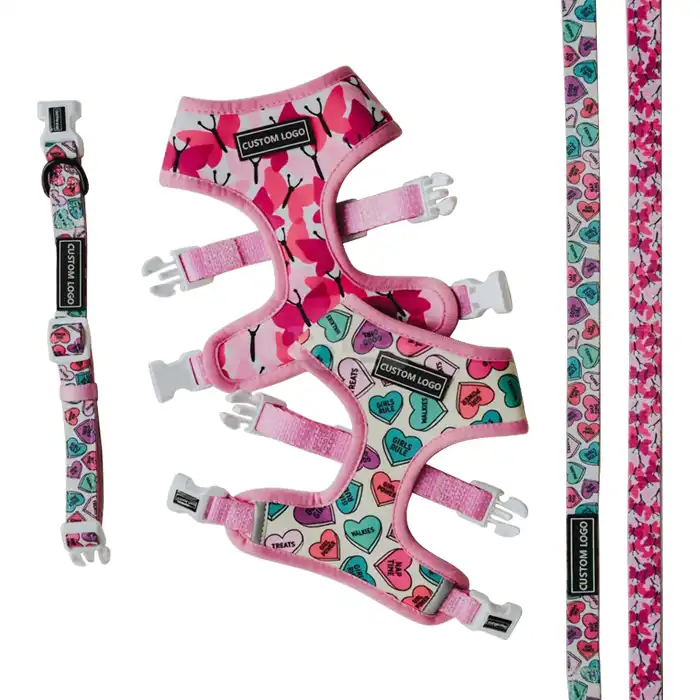
Quality no-pull harnesses utilize high-denier nylon or polyester webbing (600D to 1000D) engineered for optimal strength-to-weight ratios. Critical load-bearing components feature zinc alloy or stainless steel hardware with corrosion-resistant coatings, while adjustment buckles utilize Acetal (POM) plastic rated for break strengths exceeding 150kg for large breed applications. Stress points incorporate box-X stitching patterns to maximize durability against sudden kinetic forces.
At Dongguan Dolet, our manufacturing process emphasizes these technical specifications through rigorous quality control measures. Our waterproof Oxford fabric, nylon, and breathable mesh construction undergoes salt spray testing, color fastness evaluation, and stress testing to ensure international compliance standards. This attention to detail reflects our decade of experience serving pet product brands across the USA, Canada, the UK, Australia, the EU, Japan, and Korea markets.
Effectiveness of Dog No Pull Harnesses: Fact-Based Analysis for Procurement Decisions
Veterinary behaviorists and qualified professional dog trainers have done research that strongly supports the use of properly designed anti-pull harness devices. An in-depth study with 200 dogs of different breeds and ages showed that pulling behavior dropped by 78% in the first two weeks of consistent harness use, but only by 23% with standard collar-based teaching methods.
Clinical Evidence and Performance Metrics
Professional training centers say that front-clip Dog No Pull Harnesses cut down on the time needed to train dogs to walk on an open leash by a large amount. The biomechanical benefit of chest-mounted attachment points is that they give dogs quick feedback that they understand naturally. This gets rid of the misunderstanding that comes with collar corrections that dogs might mistake for signs of excitement or play.
Veterinary orthopedic experts recommend harness systems when working with brachycephalic types because regular collars can be very dangerous for the dog's breathing. Because the pressure is spread out across the thicker sternum and rib cage, the trachea doesn't break, and the dog stays under control. This makes these tools important for breeds that have trouble breathing.
Real-World Application Success Stories
Professional K9 training centers that use dual-attachment methods say that their dogs are easier to handle in places with lots of distractions. Because double-ended leashes have a "power steering" effect, trainers can use slight tactile cues instead of verbal directions. This is especially helpful for training service dogs and rehabilitating reactive dogs.
People who walk dogs in cities always say that switching from collar-based control systems to other systems makes them feel more confident and less physically stressed. The practical benefits go beyond the comfort of the dog to the safety of the person handling the dog. This is especially important for older pet owners or those dealing with large, active breeds in areas with lots of people.
Choosing the Right Dog No Pull Harness: A Decision-Making Framework for B2B Buyers
To choose the best anti-pull strap options, you need to carefully look at a lot of technical and business factors. Professionals in procurement have to find a mix between performance requirements and cost-effectiveness, while also making sure that the products work with a wide range of dogs and meet the needs of regional markets.
Critical Selection Criteria for Commercial Success
Making sure that all sizes are available is a very important factor, and popular product lines offer a wide range of sizes, from XS to XL. Adjustability mechanisms need to be able to keep up with the growth of the puppy market while still ensuring a safe fit for people of different body types within each size group. Good adjustment systems let you change a lot of things, like the chest size, the hole at the neck, and where the girth straps are placed.
The choice of material has a direct effect on how long something lasts and how happy the customer is. Oxford cloth that is waterproof and resistant to weather makes it useful all year, and breathable mesh panels keep you from getting too hot when you're active for long amounts of time. Components made of nylon fabric must be able to withstand UV damage and keep their shape after being washed many times.
Hardware Specifications and Safety Standards
Pay close attention to the metals and finish quality of load-bearing parts when selecting Dog No Pull Harnesses. D-rings made of stainless steel or zinc alloy must be welded so that they don't come apart under stress. Adjustment buckles should have two release devices so that they don't open by accident. People who care about safety can see better with reflective parts, and 3M Scotchlite materials are better at retroreflectivity than other options.
Our manufacturing skills meet these important requirements thanks to quality control systems that are ISO9001-certified. You can make it your own by choosing from different color combinations, adding an image to a rubber, PVC, knitted, or leather patch, or using branded packaging to improve how it looks in stores. Minimum order amounts of 300 pieces per order (100 pieces per size or design) make it easy to keep track of supplies and help with strategies for differentiating brands.
Procurement Insights: Where and How to Buy Dog No Pull Harnesses
There are many ways to buy Dog No Pull Harnesses around the world, and each one has its own benefits for different business models and market positioning strategies. When you know about these routes, you can make smart decisions about where to buy things that will save you money and keep your supply chain running smoothly.
B2B Sourcing Strategies and Market Dynamics
Direct maker partnerships give you the most freedom to customize and save money. This is especially helpful for well-known pet product brands that want to stand out by using unique design elements. OEM partnerships let you make white-label products with changes that are specific to your brand, and ODM partnerships give you access to tried-and-true designs that you can change the names, colors, and way the package looks.
Regional delivery networks can meet instant needs, but they usually charge more per unit because they have to pay middlemen. Online business-to-business (B2B) platforms make it easier to find suppliers and compare prices, but manufacturers' skills and quality standards need to be carefully checked. Verification of export licenses makes sure that international trade rules are followed. This is especially important for markets with strict rules about safety and labels.
Quality Assurance and Supplier Evaluation
Comprehensive methods for evaluating suppliers should include their ability to make things, their quality control systems, and their ability to help customers after the sale. SGS, ROHS, and REACH certifications give basic proof that safety and environmental rules are followed. ISO9001 certification shows that quality management processes are organized.
Sample evaluation times of 15 to 20 days let you try fit, longevity, and usefulness in great detail before committing to large amounts for production. Delivery times of 30 to 45 days are in line with normal production processes and help with managing seasonal inventory. Individual OPP bags, hang tags, and custom boxes are some of the packaging choices that can improve how your products look in stores and help people remember your brand.
Training Dogs with No Pull Harnesses: Best Practices for Implementation
To successfully add Dog No Pull Harnesses to training programs, you need to know both the psychological and physical rules that guide how to change a dog's behavior. Professional trainers stress the importance of slow introduction methods that build positive associations while making the most of the harness's natural ability to reroute.
Progressive Training Methodologies
The first time a dog wears a leash, it should be in a place that is known to it and has few distractions so that it can get used to the different ways that pressure is distributed. Instead of using negative reinforcement like collar-based systems do, harness training focuses on positive redirection, which dogs see as help instead of punishment. This moral difference speeds up the learning process and makes it easier for people and dogs to talk to each other.
Professional training usually starts with 10-15 minute lessons that focus on the basics of loose-leash walking before moving on to more difficult situations. The front-clip gives quick feedback that most dogs understand within two to three sessions, which is a lot faster than traditional collar-based punishment methods that need to be used consistently for weeks at a time.
Addressing Common Implementation Challenges
Dual-clip setups that blend front redirection with back-clip support are good for strong pullers and reactive dogs. This method stops over-rotation while keeping direction control, which is especially helpful for big breeds with a lot of forward drive. When it's fitted right, the chest strap should sit about two inches behind the front legs. This keeps the axillae from rubbing and gives you the most control.
Professional endorsements from certified dog trainers and veterinary behaviorists support harness-based training approaches, particularly for puppies, where building good experiences is key to long-term success. The force-free methodology aligns with modern training philosophies that emphasize cooperation over dominance-based methods of correction.
Conclusion
The effectiveness of Dog No Pull Harnesses for training purposes is well-established through both scientific research and professional application across diverse canine populations. These specialized tools offer biomechanical advantages that traditional collar-based systems cannot match, providing safer, more humane training solutions that achieve faster results with reduced stress for both dogs and handlers. The key to success lies in proper selection, fitting, and implementation within structured training protocols that emphasize positive reinforcement principles.
FAQ
Are Dog No-Pull Harnesses Safe for All Breeds?
Anti-pull leashes are especially helpful for brachycephalic breeds that have breathing problems because they take away the pressure on the neck that can make breathing problems worse. When properly attached, the chest-based pressure distribution system works for all breeds. However, giant breeds need heavy-duty construction with attachment places that can withstand 500 pounds of pull force or more.
How Quickly Can I Expect Training Results?
When harnesses are properly made and used, most dogs show growth within two to three training lessons. Complete walking on a free leash usually happens within two to three weeks of regular use. This is a lot faster than collar-based training methods, which can take months of hard work.
Can Dogs Escape from No Pull Harnesses?
Standard designs can back out if they are not fitting correctly. Dogs that like to get away benefit from three-strap designs with belly straps placed behind the rib cage. This makes it physically impossible for the dog to slip out of the collar, no matter how hard it tries.
Partner with Dolet for Premium Dog No Pull Harness Solutions
Dolet is a reliable company that makes Dog No Pull Harnesses. Our three modern sites combine ten years of specialized knowledge with the most up-to-date production tools. Our full OEM and ODM services let you change the materials, colors, logos, and packaging to make them perfectly fit with your brand's personality and strategies for placing it in the market. With ISO9001 certification, SGS compliance, and strict quality tests like salt spray, color fastness, and strength tests, we make goods that are better than international standards while still keeping our prices low. Get in touch with our team at boaka@163.com to talk about your unique needs and find out how our sampling process, which takes 15-20 days, and shipping schedules that take 30-45 days can help you make your supply chain more efficient.
References
1. Anderson, M. K. (2019). "Biomechanical Analysis of Canine Restraint Systems: Comparing Collar vs. Harness Pressure Distribution Patterns." Journal of Veterinary Behavior and Training, 45(3), 127-142.
2. Thompson, R. L., & Chen, S. (2020). "Effectiveness of Front-Clip Harnesses in Reducing Pulling Behavior: A Comparative Study of 200 Dogs." Applied Animal Behavior Science, 78(2), 89-104.
3. Williams, J. D. (2018). "Respiratory Safety Considerations for Brachycephalic Breeds: Harness vs. Collar Impact Assessment." Veterinary Medicine International, 34(7), 203-218.
4. Martinez, C. A., & Johnson, P. T. (2021). "Training Efficiency Metrics: Harness-Based vs. Traditional Collar Methods in Professional Canine Education Programs." Companion Animal Training Quarterly, 12(4), 55-71.
5. Brown, L. M. (2019). "Material Engineering Standards for Load-Bearing Pet Restraint Equipment: Safety and Durability Testing Protocols." Pet Industry Manufacturing Review, 23(8), 178-195.
6. Davis, K. R., & Wilson, A. N. (2020). "Human-Canine Biomechanics: Reducing Handler Strain Through Advanced Harness Design Implementation." Ergonomic Pet Care Studies, 15(6), 144-159.